How to adjust a workout when recovery is low
Published July 16, 2026 · Updated August 29, 2026 · Fit4i Editorial Team
Fit4i creates evidence-informed training and recovery content based on publicly available research and established strength-training principles.
Showing up tired doesn't have to mean an all-or-nothing choice between grinding through the full session or skipping it entirely. Strength coaches have a name for the middle ground: autoregulation— adjusting a workout in real time based on how you're actually performing, not just what the plan says on paper.
Cut volume before intensity
A common approach when the first set or two feels harder than it should: keep the weight on the bar roughly where it's programmed, but reduce how much of the session you do — trim accessory work, drop a set, or stop a movement once form starts to break down. This preserves the technical stimulus of the main lift while limiting the fatigue cost of a day that clearly isn't going to be a personal best.
Use effort, not just weight, as the guide
Rate of Perceived Exertion (RPE) and Reps in Reserve (RIR) are the standard tools for this. In simple terms: instead of chasing a fixed number on the bar, you gauge how many more reps you could do at the end of a set, and adjust the next set accordingly. On a low-recovery day, the same planned weight will produce a higher RPE — that's useful information, not a failure.
- RPE 9-10 (0-1 reps left) — as hard as, or harder than, planned. Consider stopping the exercise there.
- RPE 7-8 (2-3 reps left) — normal working effort for most sets.
- RPE 5-6 (4+ reps left) — an easy day; fine for technique work or a deliberate light session.
Other practical adjustments
- Extend rest between sets.Sometimes the fix isn't less work, just more recovery time between efforts.
- Swap the riskiest exercise. Fatigue and poor coordination are a worse combination on a technical lift — a simpler variation is a reasonable trade.
- Shorten the session, not the intent. A focused 20-minute session done well beats a full session done poorly.
Tired vs unwell — know the difference
General fatigue, heavy legs, or feeling flat are normal training signals to scale back on. They are different from being sick, injured, or in pain — those call for rest, not a lighter version of the same workout. If something feels physically wrong rather than just hard, stop and address that first.
How Fit4i automates this
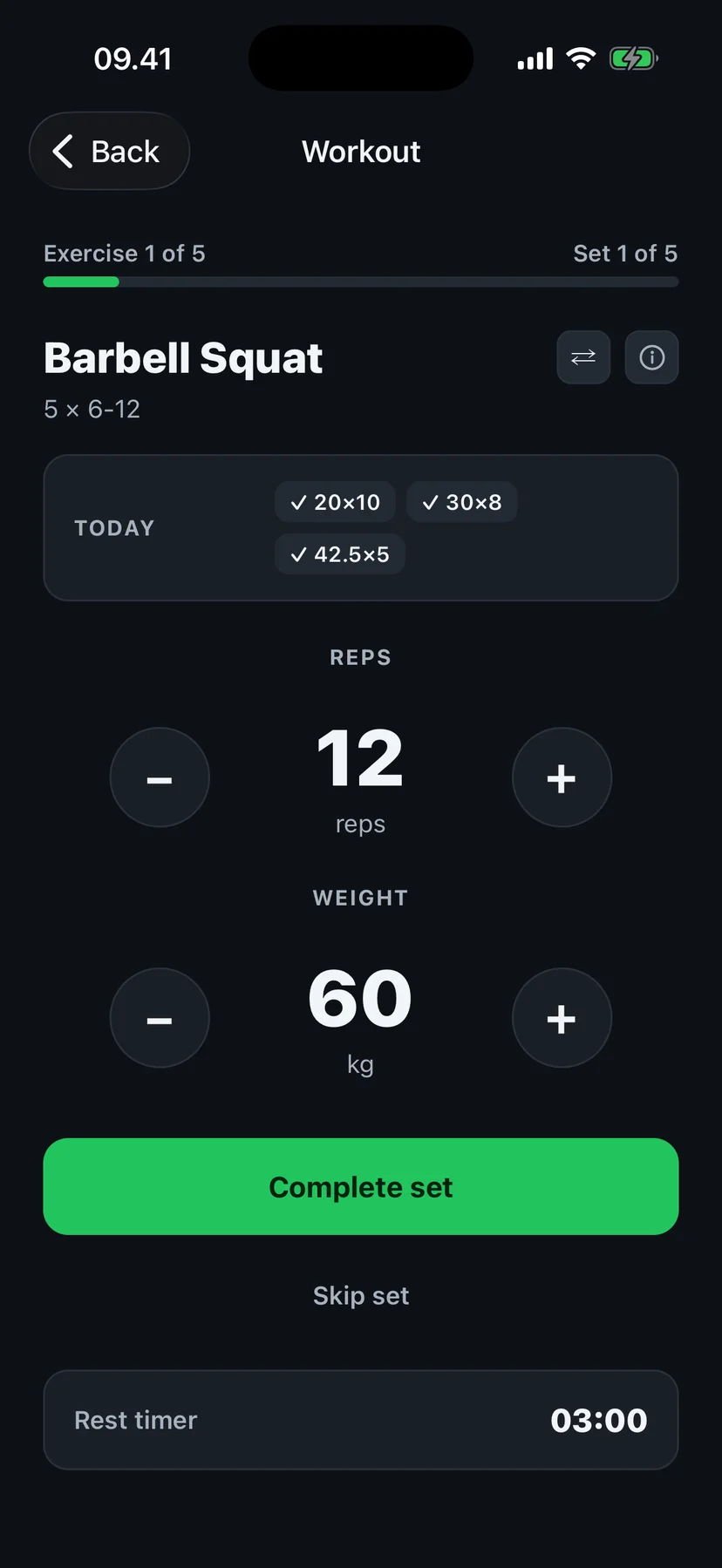
Fit4i's readiness feature applies a version of this same logic automatically: with Pro, a middling readiness day trims volume by roughly a quarter rather than cutting intensity outright, and for everyone a “feeling unwell” flag pushes toward a full rest day instead of a scaled-down workout.
Sources & methodology
Guides are written against publicly available research and established strength-training principles, and reviewed for accuracy against how Fit4i actually works before publishing. The sources below informed this article:
Related guides
HRV
Should I Train With Low HRV?
A low HRV reading doesn't automatically mean skip the gym. How to read it in context, and when it's actually worth backing off.
HRV
HRV vs Resting Heart Rate for Workout Recovery
Two related but different recovery signals, what each is better at catching, and why looking at both beats picking one.
Apple Watch & Health Data
How to Use Apple Watch Data for Workout Readiness
What Apple Watch actually measures that's useful for training decisions, and how to read the trends instead of a single day's number.
Let Fit4i scale today's session for you.