HRV vs resting heart rate for workout recovery
Published July 16, 2026 · Updated August 29, 2026 · Fit4i Editorial Team
Fit4i creates evidence-informed training and recovery content based on publicly available research and established strength-training principles.
Most recovery apps show both numbers side by side without explaining why you'd need two. Heart-rate variability (HRV) and resting heart rate (RHR) are related — both reflect activity in your autonomic nervous system — but they behave differently enough that each catches things the other can miss.
What each one measures
- Resting heart rate is simple: beats per minute at rest. Lower is generally associated with better cardiovascular fitness, and a short-term rise above your normal is a common early sign of accumulated fatigue, illness, heat or dehydration.
- Heart-rate variabilitymeasures the tiny differences in time between consecutive heartbeats. It's a more direct window into the balance between your “fight-or-flight” and “rest-and-digest” nervous system branches — higher variability at rest generally reflects a more recovered, less stressed state.
Where they agree, and where they don't
On a day of genuine overreaching, both often move together: resting heart rate ticks up while HRV drops. But they can also diverge — research on athlete monitoring notes that HRV is sensitive to a broad range of stressors beyond training (sleep, hydration, emotional stress), which makes it noisier day-to-day, while resting heart rate tends to be a steadier, slower-moving signal. Neither one is strictly “more accurate” — they're better used together than in isolation.
A practical rule of thumb
- Both normal → business as usual.
- One slightly off, the other normal → probably noise; check how you actually feel before changing anything.
- Both moving the same direction (RHR up, HRV down) for more than a day → a genuine signal worth respecting with an easier session.
Why Fit4i looks at both
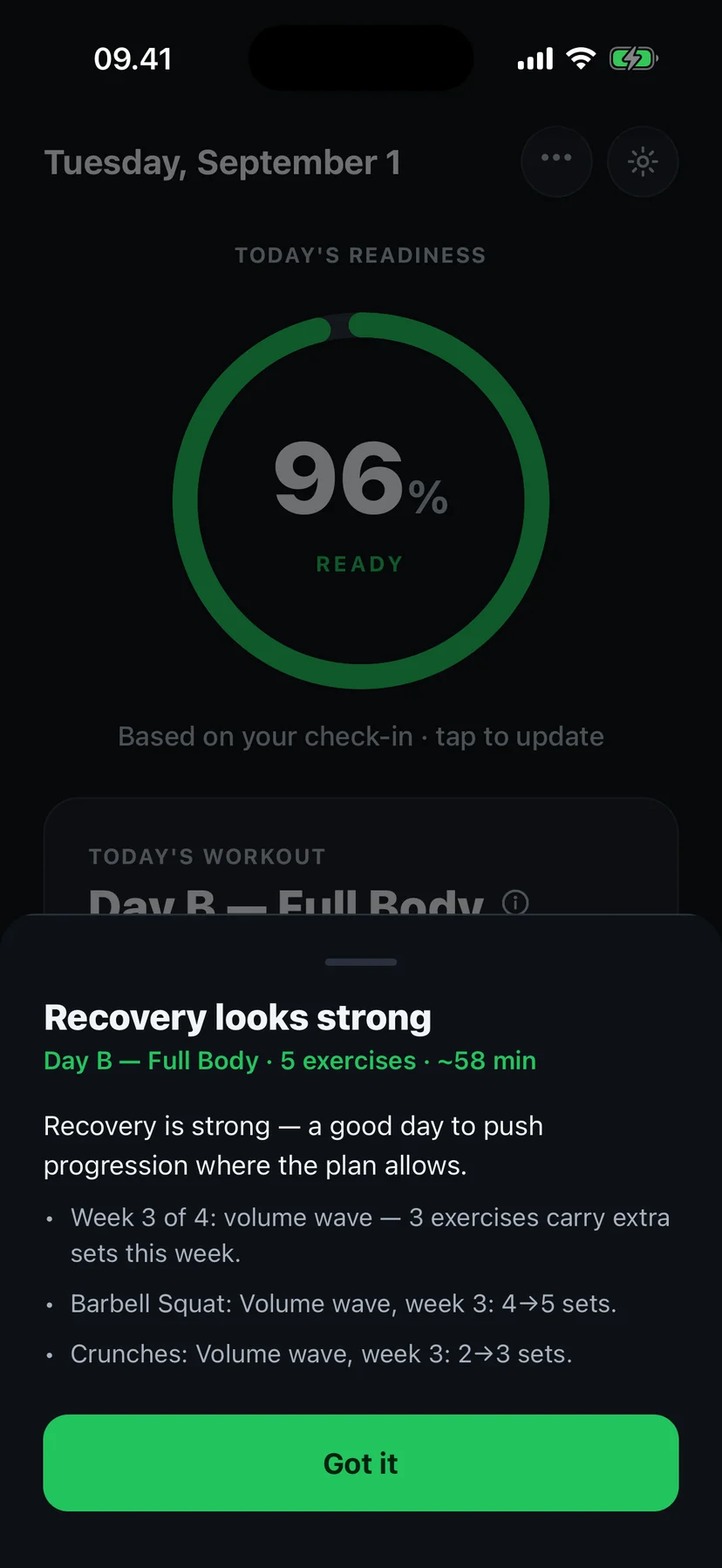
This is exactly why Fit4i's readiness score doesn't rely on HRV alone — it weighs HRV and resting heart rate against your own personal baselines for each, together with sleep and recent training load, so a noisy single-metric day doesn't trigger an unnecessary change to your plan.
Sources & methodology
Guides are written against publicly available research and established strength-training principles, and reviewed for accuracy against how Fit4i actually works before publishing. The sources below informed this article:
Related guides
HRV
Should I Train With Low HRV?
A low HRV reading doesn't automatically mean skip the gym. How to read it in context, and when it's actually worth backing off.
Apple Watch & Health Data
How to Use Apple Watch Data for Workout Readiness
What Apple Watch actually measures that's useful for training decisions, and how to read the trends instead of a single day's number.
Recovery
How to Adjust a Workout When Recovery Is Low
Practical ways to scale a session down instead of skipping it entirely — and how to tell the difference between tired and unwell.
See HRV and resting heart rate combined into one recommendation.